Why Did My Paver Sealer Turn White or Cloudy?
It is almost always moisture, too much product, or the wrong conditions. Some of it can be corrected. Some of it has to come off and start again — and it is worth knowing which one you are looking at before anyone touches it.
Trapped Moisture Is One of the Most Common Causes
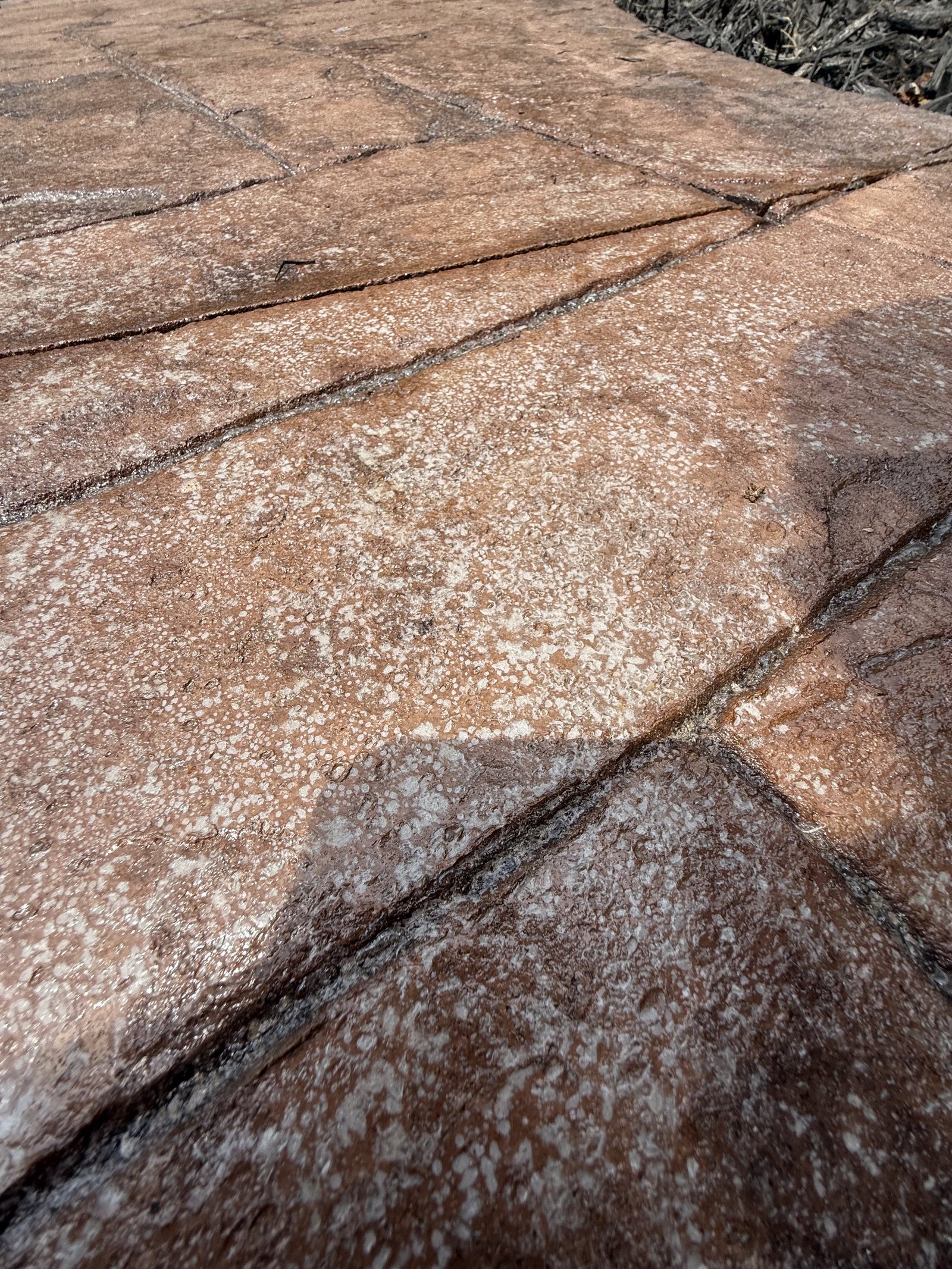
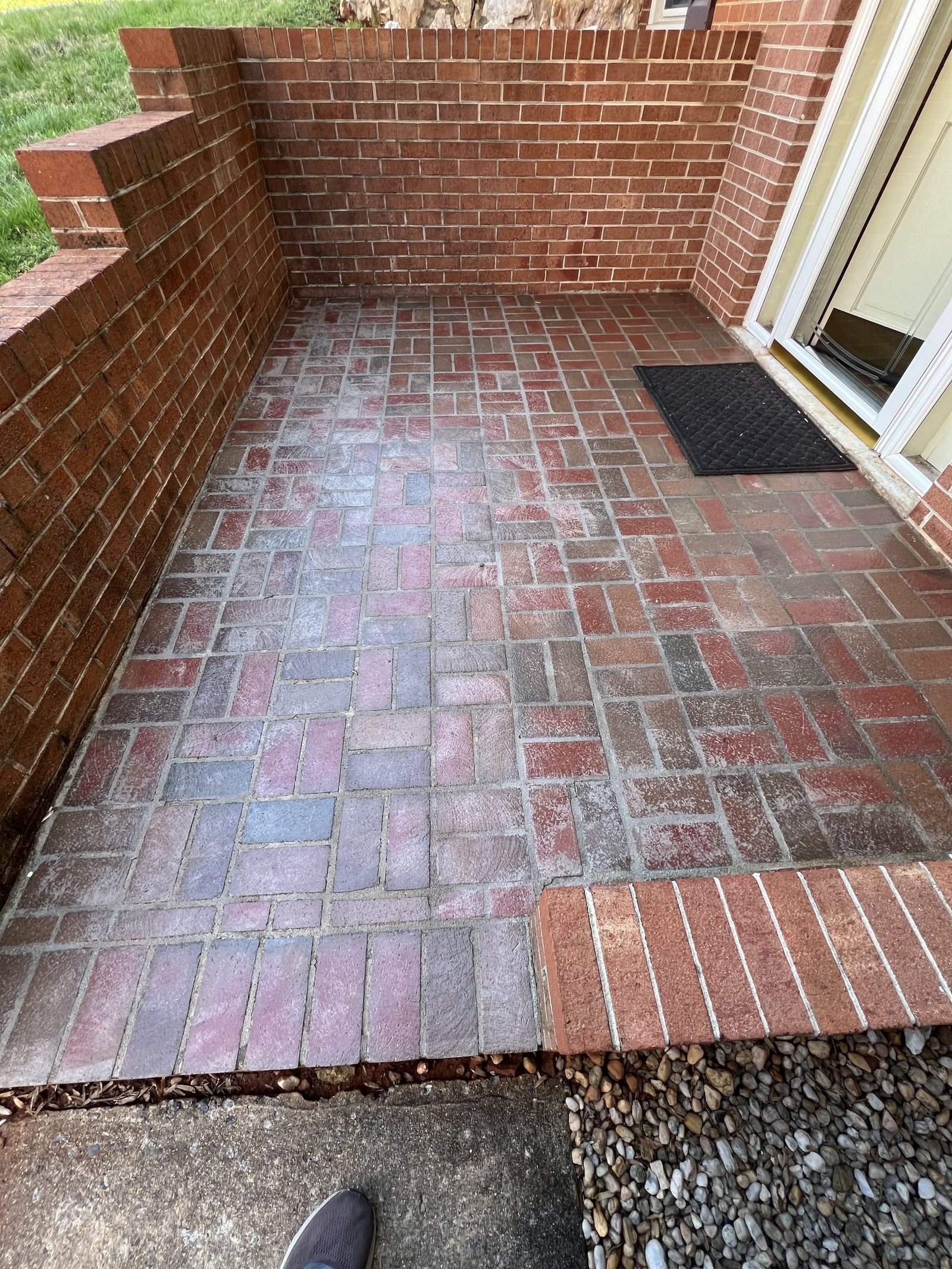
Sealer is meant to be clear. When it goes milky, white, hazy, or blotchy, something got between the sealer and the paver — and the something is usually water.
Moisture in the paver, in the joint sand, or in the base underneath does not simply sit there. It moves upward. If a sealer film has already formed over the top, that moisture cannot escape as vapour would through bare stone, so it collects under the film and scatters light. That is the white you are looking at.
The second most common cause is simply too much product. A heavy coat, or a second coat applied before the first had cured, holds solvent and moisture in the film instead of letting it flash off. The result looks similar and gets misdiagnosed constantly.
What Actually Goes Wrong
Almost every cloudy patio traces back to one of these. Often more than one at once.
- Sealed too soon after cleaning or rain. The surface felt dry. The paver and the base underneath were not. This is the single most common cause.
- Damp joint sand. Joints hold water long after the paver faces look dry, and sealer bridges across the top of them.
- Too much product, or a second coat too soon. Sealer needs to release solvent as it cures. A film that is too thick traps it.
- Applied in the wrong conditions. Too cold and the film cannot form properly. Too hot and the surface skins over before the rest has levelled. High humidity does its own damage.
- Groundwater or poor drainage under the patio. Less common, but it is the one that keeps coming back after every repair. If the base stays wet, no sealer will stay clear.
- Sealing over an old, failing sealer. New product over a coating that is already delaminating will not bond, and the failure underneath shows straight through.
Can It Be Fixed, or Does It Have to Come Off?
This is the question worth answering before anyone quotes you, and the answer depends entirely on what is already on your pavers.
Solvent-based acrylic sealers can often be recovered. Acrylic stays soluble after it cures, so the existing film can be re-opened with solvent, allowing the trapped moisture to escape and the sealer to re-level as it dries again. When conditions are right, a cloudy acrylic patio can come back clear without stripping anything.
Two-part urethane sealers are a different situation. A urethane cures by chemical reaction rather than by solvent evaporation, so once a true two-component urethane has chemically cured it generally cannot simply be re-dissolved and re-leveled the way a solvent-based acrylic can. If the coating itself has failed, expect removal rather than a recovery.
That difference is the whole reason we ask what was previously applied before quoting a repair. An honest answer to that question saves you money. A guess costs you a patio.
The other case that always means stripping is a coating that has started to peel or flake. Whitening under an intact film is one problem. A film that has lost its grip on the paver is a different one, and putting more product on top of it only buries the failure.
How This Gets Avoided in the First Place
None of this is exotic. It is mostly patience and reading conditions correctly, which is exactly what gets skipped when a job is being rushed to fit a schedule.
If you want to see what the other version looks like, there are full write-ups of a stamped concrete restoration in Moneta and a paver clean, sand and seal in Union Hall — same products, same weather, no clouding.
- Real dry time after cleaning — measured against the weather that week, not against the calendar
- Joint sand installed and genuinely dry before any sealer goes down
- The right number of coats for the product, applied at the right rate, with proper cure time between them
- Application in a temperature and humidity window the product can actually cure in
- Knowing what is already on the pavers before adding anything new
What We Would Tell You at the Patio
Not every clouded surface is worth repairing, and we would rather say so on site than sell you a fix that will fail again in a year.
If the base underneath holds water, or drainage sends runoff across the surface every time it rains, stripping and resealing buys you an appearance that will not last. The sealer is not the problem in that case — it is just the part you can see.
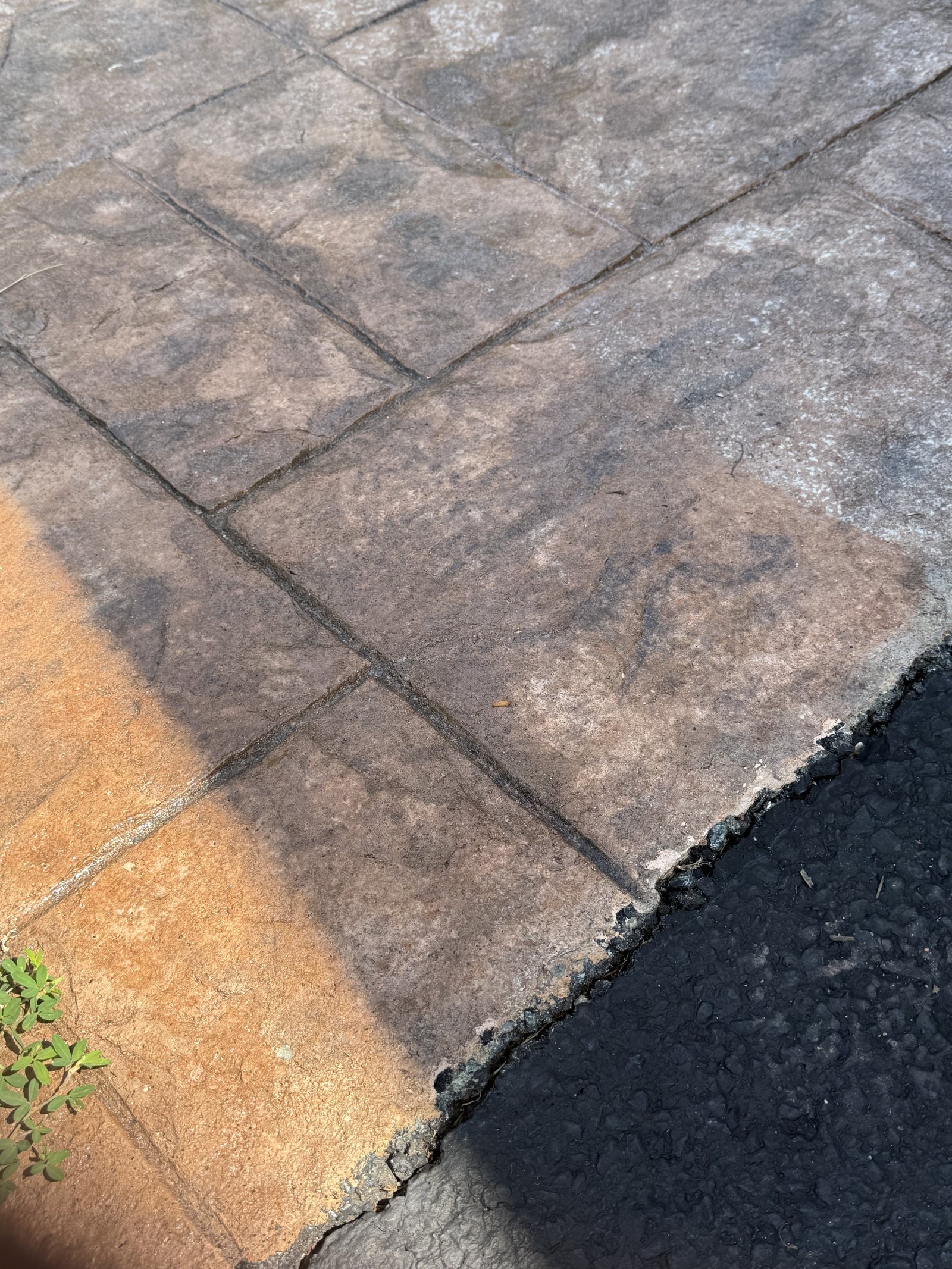
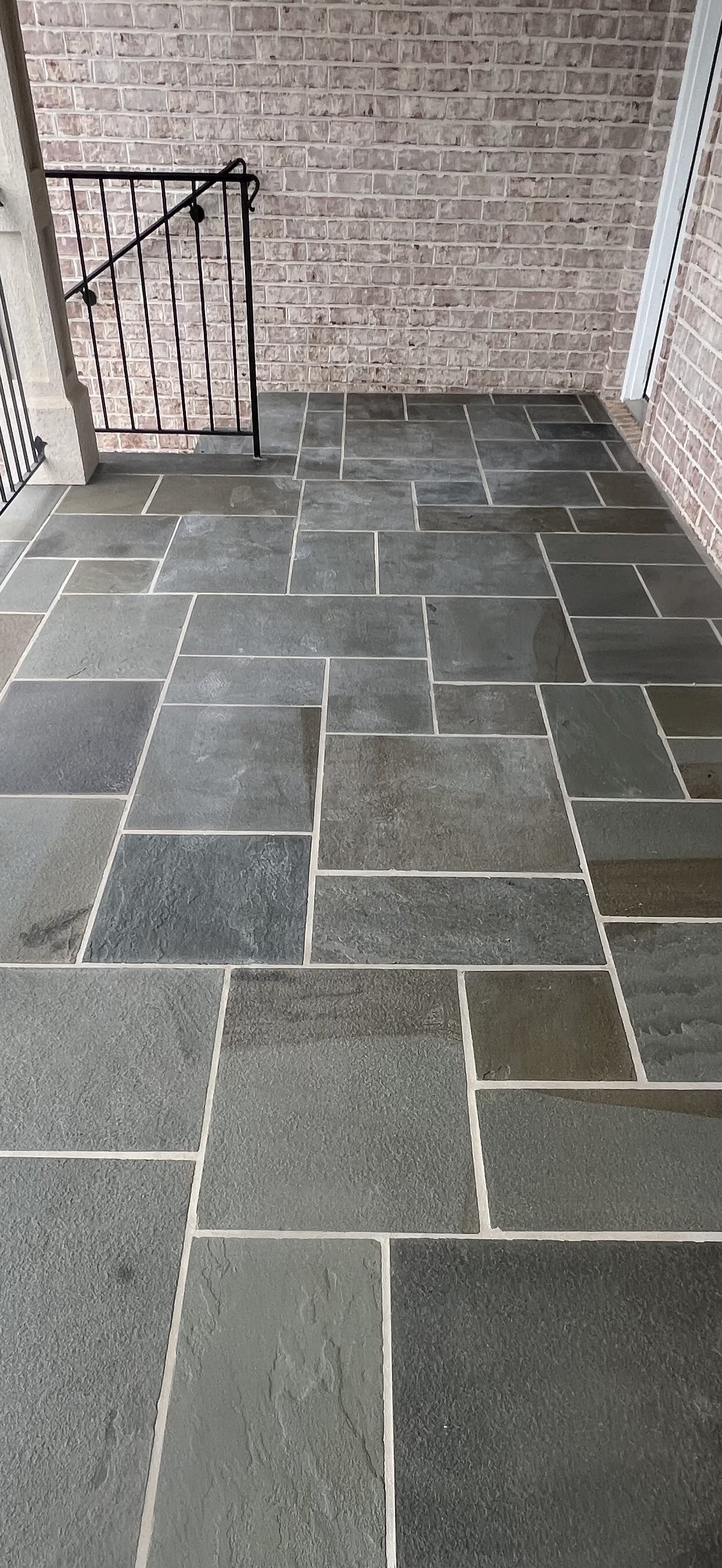
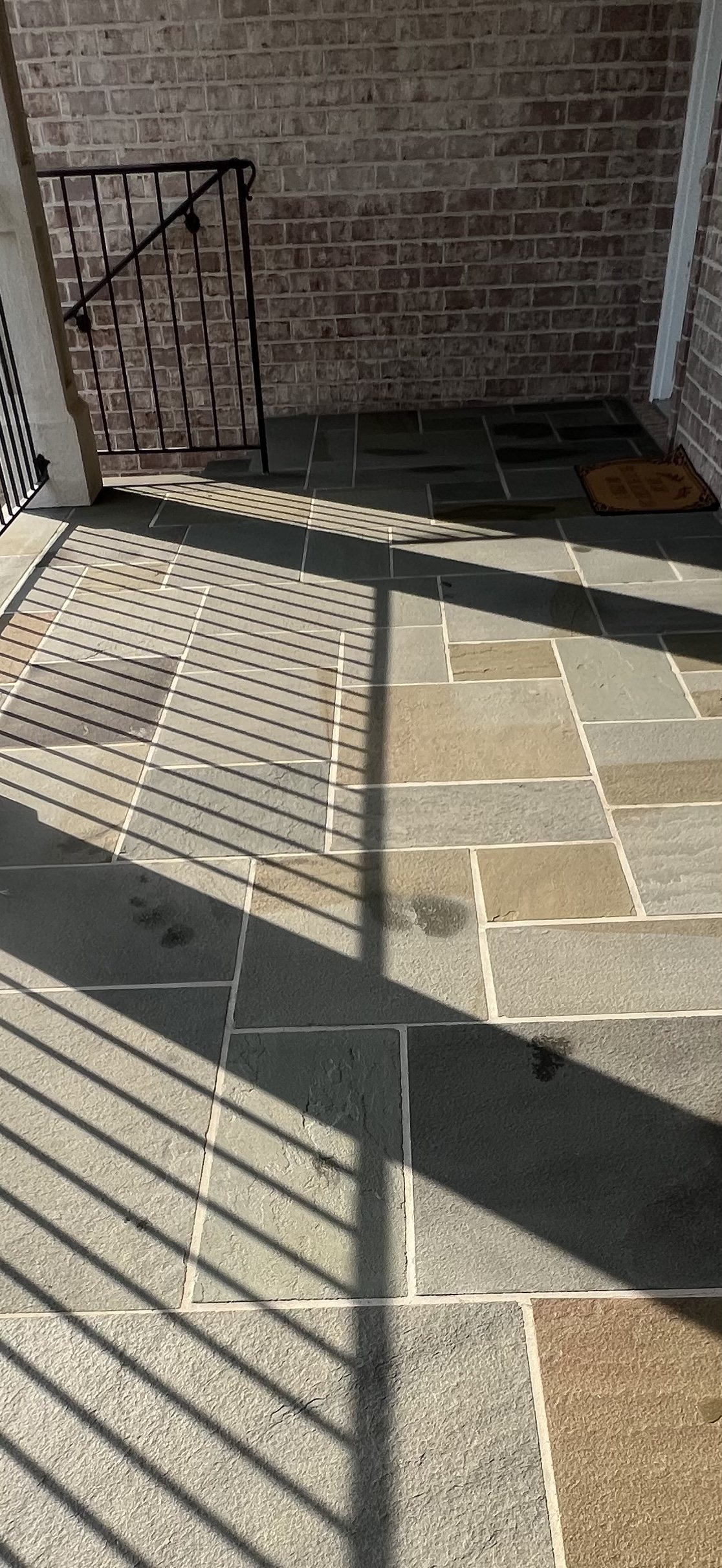
The common thread running through the failed surfaces shown on this page is over-application — too much product, coat over coat, or another coat applied before the previous one was ready. Not a bad product, not bad luck. Sealer is one of the few things in this trade where doing less is doing it right.
We are a Trident Master Certified Applicator. Whatever is on your surface now, the useful first step is having somebody identify it before anything new goes on top of it.
Common Questions
Will cloudy sealer clear up on its own?
Sometimes, if it is very mild and the moisture has a route out. A light haze after a damp spell will occasionally fade over several warm, dry weeks. Dense white patches or a milky film across the whole surface will not. If it has not improved after a stretch of genuinely dry weather, it is not going to.
Can I fix it myself with a solvent from the hardware store?
It depends what is on there, and that is the trouble — the same treatment that recovers an acrylic will do nothing to a cured urethane except waste your afternoon. Solvents used for this are flammable, produce strong fumes, and behave differently in heat. It is worth having somebody identify the existing coating before anything gets applied to it.
How much does it cost to strip and reseal?
It depends on the size of the patio, what coating is on it, how many layers have built up over the years, and the condition of the joints underneath. Stripping is more work than sealing, so it is not a small job. We look at it in person and give you a number for your patio rather than a range that would not mean anything. For a breakdown of what moves restoration pricing up or down, see our exterior cleaning and sealing cost guide.
More From Pro-Shine
 Written by Chuck Terry, owner of Pro-Shine Softwash in Moneta, VA. Pro-Shine has 10+ years of exterior cleaning experience serving Smith Mountain Lake and the surrounding communities across Bedford, Franklin and Roanoke counties. Chuck is a Trident Master Certified Applicator and visits every job in person before quoting it.
Got a Patio That Went Cloudy?
Every estimate is free and done in person. Call or request a quote and we will come take a look.
Tell us about your project and we'll get back to you fast — usually within a few hours.
No obligation. No high-pressure sales — or high-pressure washing.