
How Often Should Pavers Be Resealed?
The honest answer is that your pavers will tell you, and there is a thirty-second test that settles it. But there are realistic timelines worth knowing before you plan around it.
Two Signs, and You Can Check Both Yourself
A urethane sealer does not fail suddenly. It wears, and it gives you plenty of warning if you know what to look at.
The sheen goes flat. Whatever gloss level the patio had when it was finished slowly softens off. It is gradual enough that you may not notice it week to week, which is why comparing a traffic path against a sheltered corner is more useful than looking at the whole surface at once.
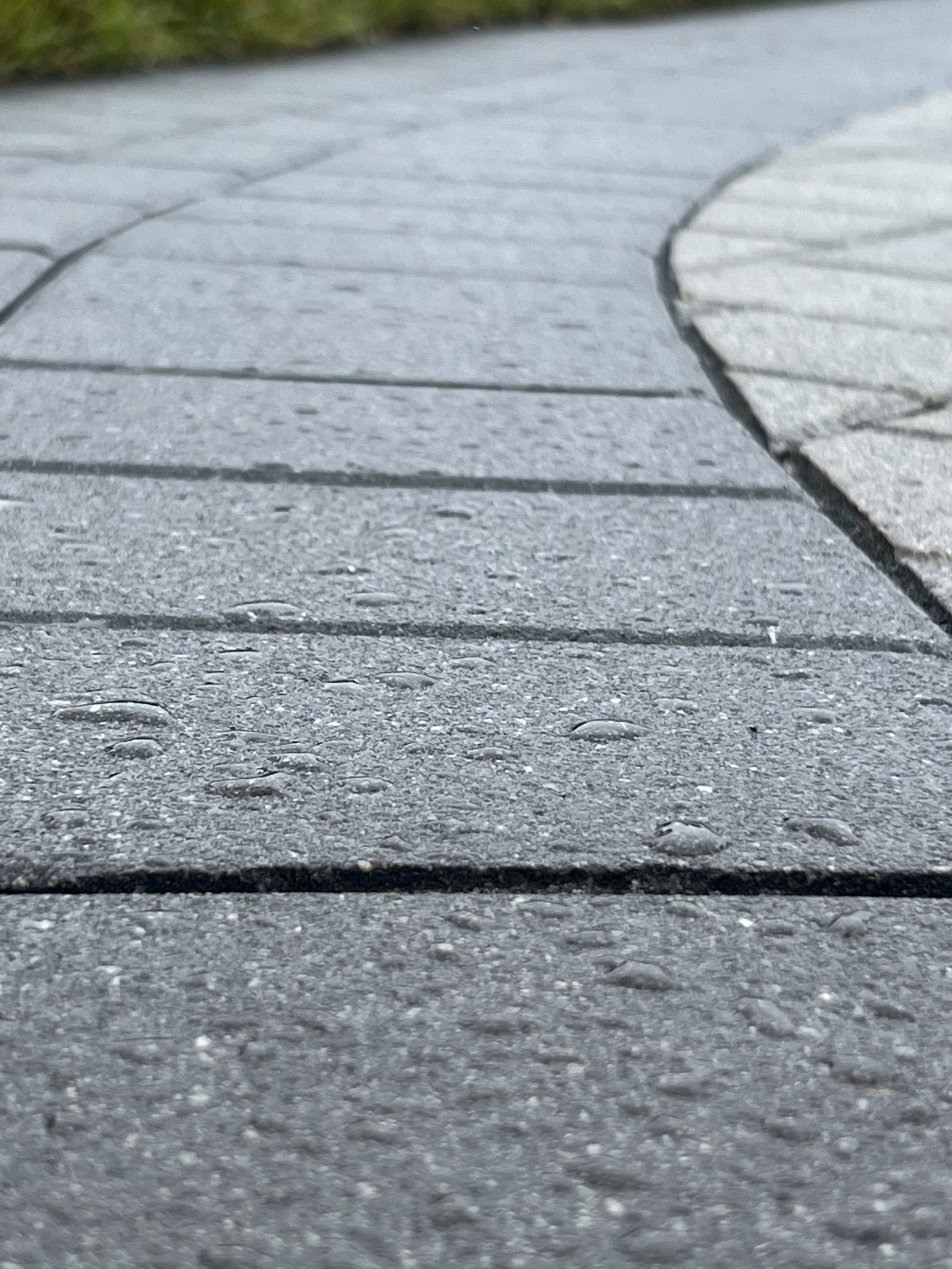
Water stops beading. With the film-forming urethane we use, this is the most useful field check available to a homeowner. When water begins spreading and readily darkening the paver instead of sitting up on the surface, that is a strong sign the coating has worn substantially in that area. It is an indicator rather than a laboratory result — different sealer chemistries behave differently, and a penetrating sealer will not read the same way at all — but on a film-forming system it tells you what you need to know.
Neither one means anything has gone wrong. It means the sealer did its job for as long as it was going to.
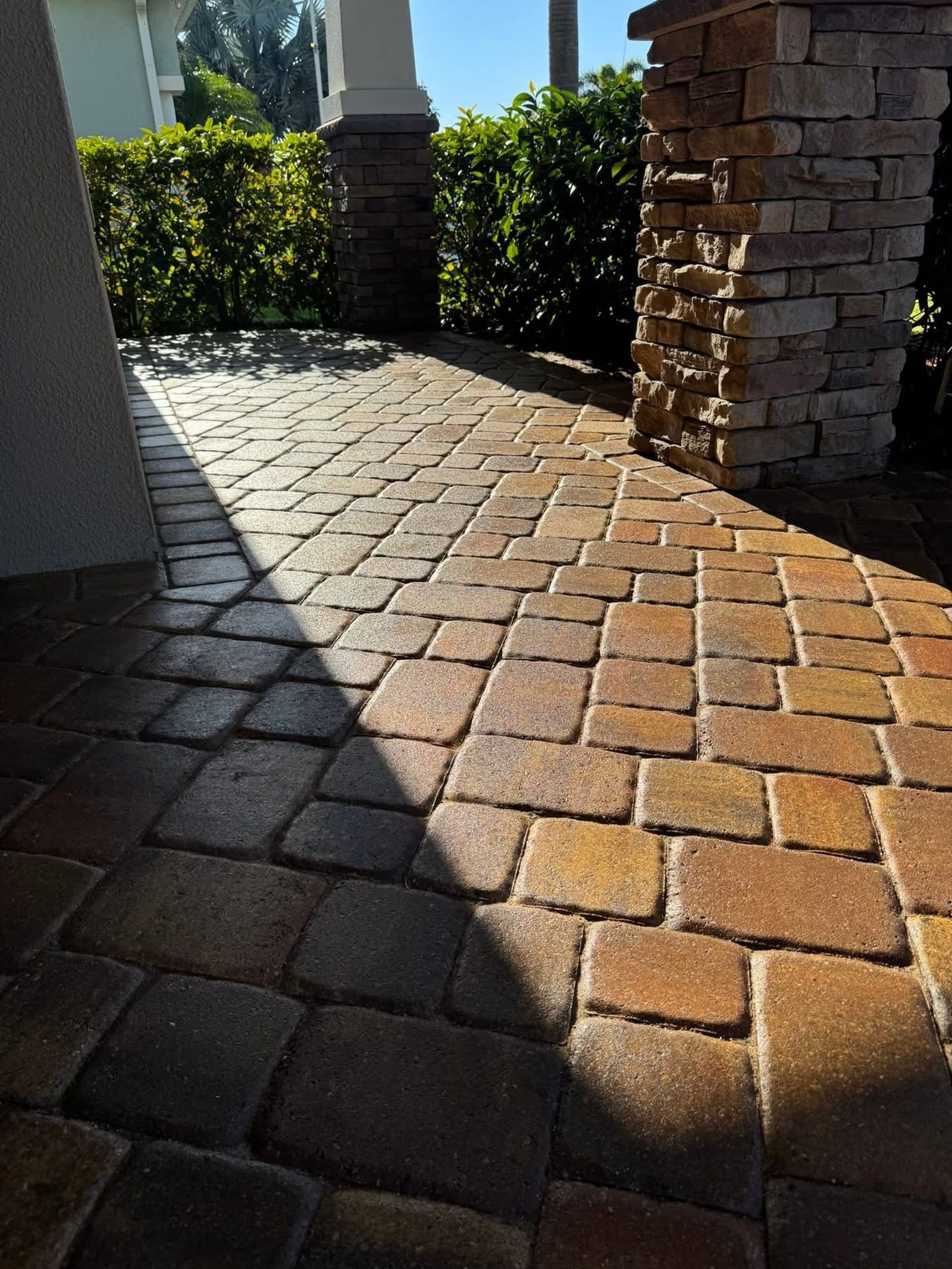
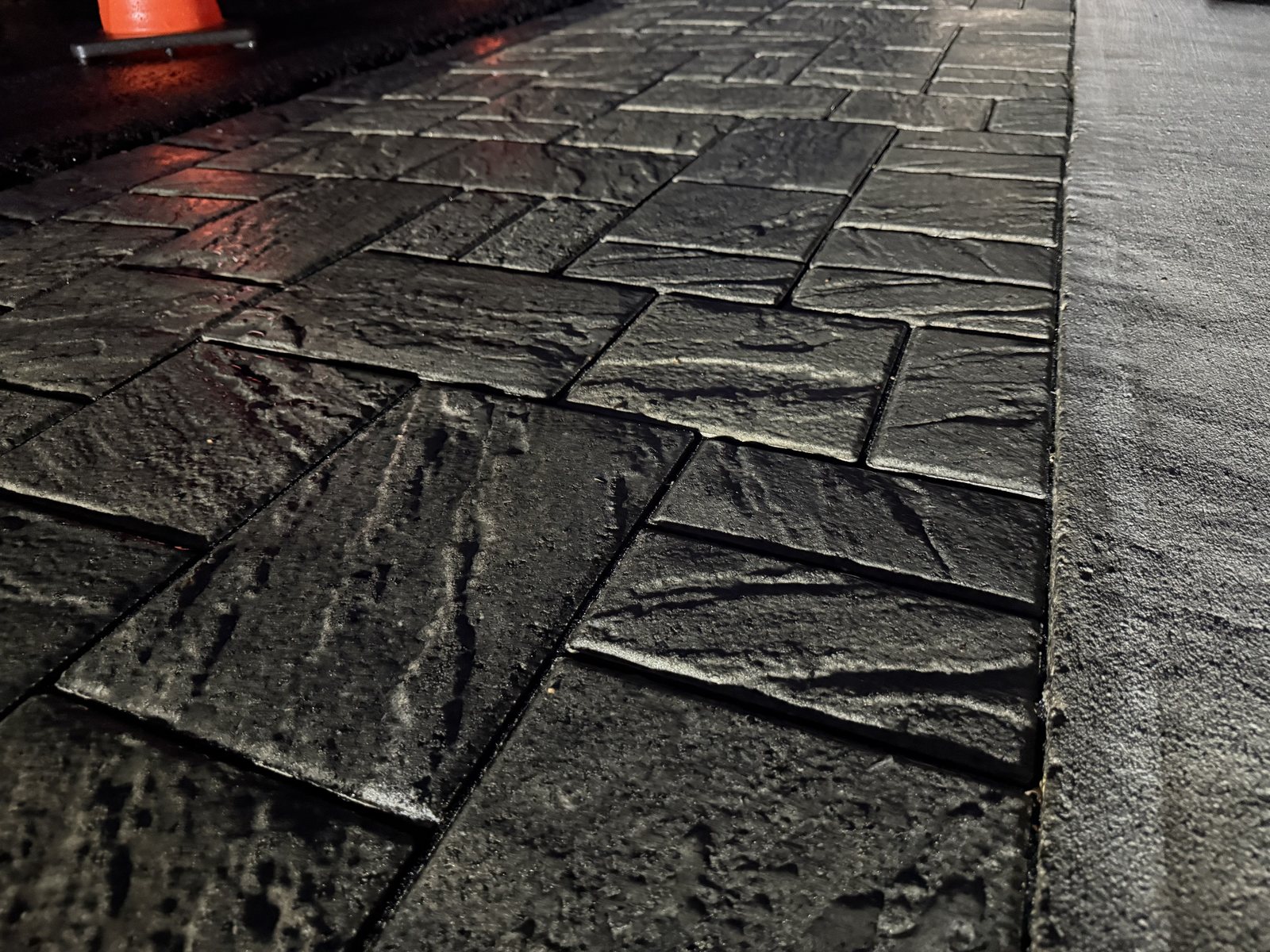
The Water Test
This takes half a minute and it is the same check we make when we walk a patio.
Drip a few drops of water onto the surface. Watch what happens. If the drops bead up and hold their shape, sealer is still present and working. If they spread out and darken the paver, there is little or no sealer left there.
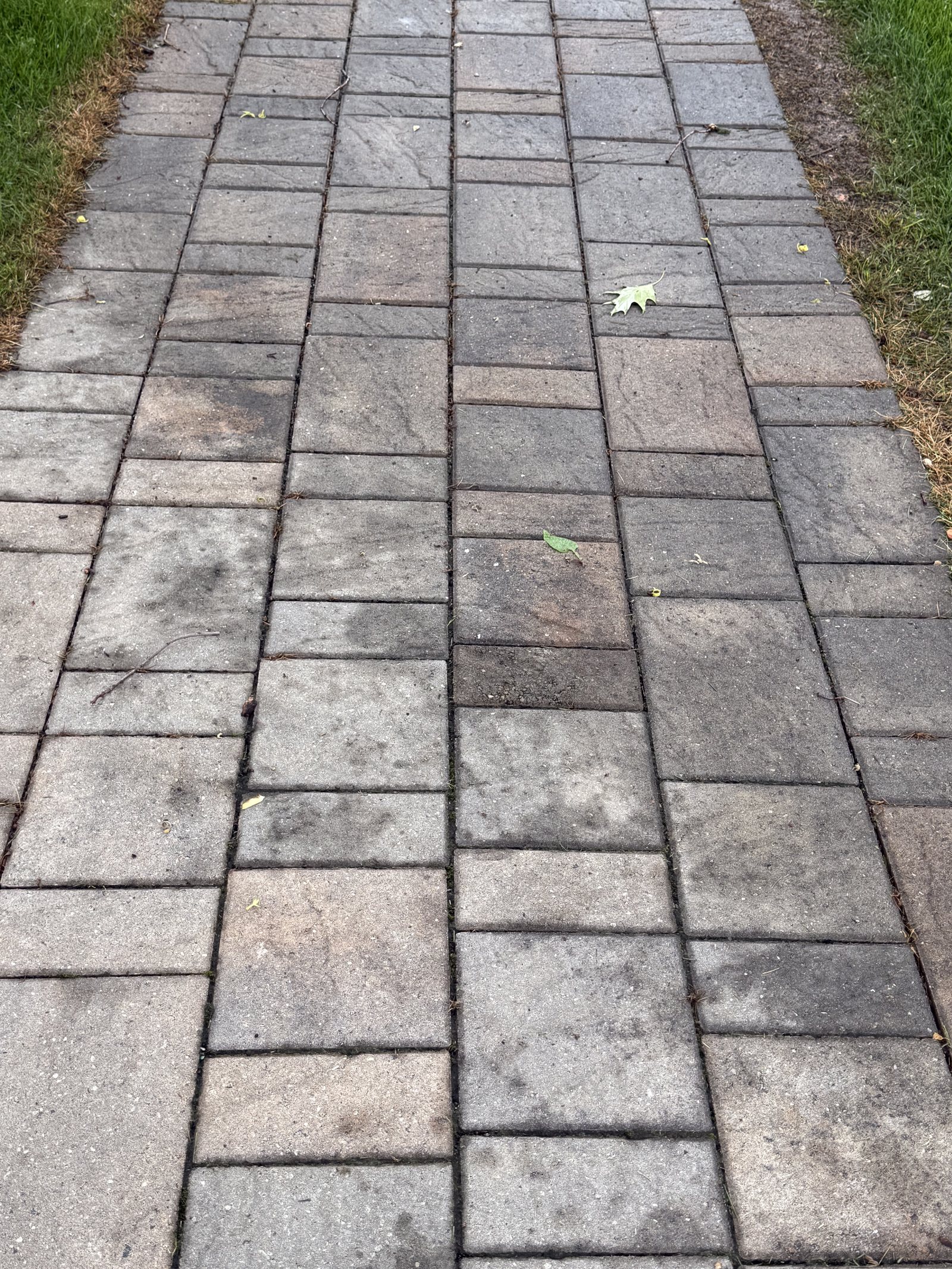
Do it in several places, and pick them deliberately. Test the walking path, test a spot under a table that never gets sun, and test the edge nearest the downspout. A patio does not wear evenly, and the difference between those three spots tells you more than any single reading.
If some areas bead and others do not, you are not late. You are exactly on time.
How Long It Actually Lasts
Trident publishes a three-to-five-year window for reapplication of the sealer we use, depending on surface and site conditions. That is a fair general figure. In practice we have found the first cycle runs shorter than the ones after it, and it is worth understanding why.
The first reseal comes sooner. Pavers that have gone ten years unsealed are thirsty. They are porous and open, and the first application soaks in rather than building the film it eventually will. On a patio like that we would expect to be back in two to three years for the next coat.
After that, three to four years is typical. Once there is a sound base coat in place, each subsequent application sits better and wears longer.
Those are starting points, not promises. A south-facing pool deck that takes sun all day and gets scrubbed regularly will run at the short end. A shaded patio with light use will go longer. We would rather tell you what your patio is doing than quote you a number off a chart.
- Sun exposure — UV is the main thing wearing the film down
- Traffic — walking paths and driveways go first, sheltered corners last longest
- Cleaning frequency — regular gentle rinsing helps; aggressive washing shortens it
- Drainage — anywhere water sits or sheets across will wear faster
- Whether it was ever sealed before — the biggest single factor in that first cycle
Typical Resealing Timeline
- Previously unsealed or very porous pavers: check around 2–3 years
- Established coating system: often 3–4 years
- Trident’s published range: 3–5 years, depending on surface and site
- The better answer: test the surface rather than relying on the calendar
You Are Not Only Protecting the Look
The color enhancement is the part people notice, but it is not the main reason to keep a coating in place.
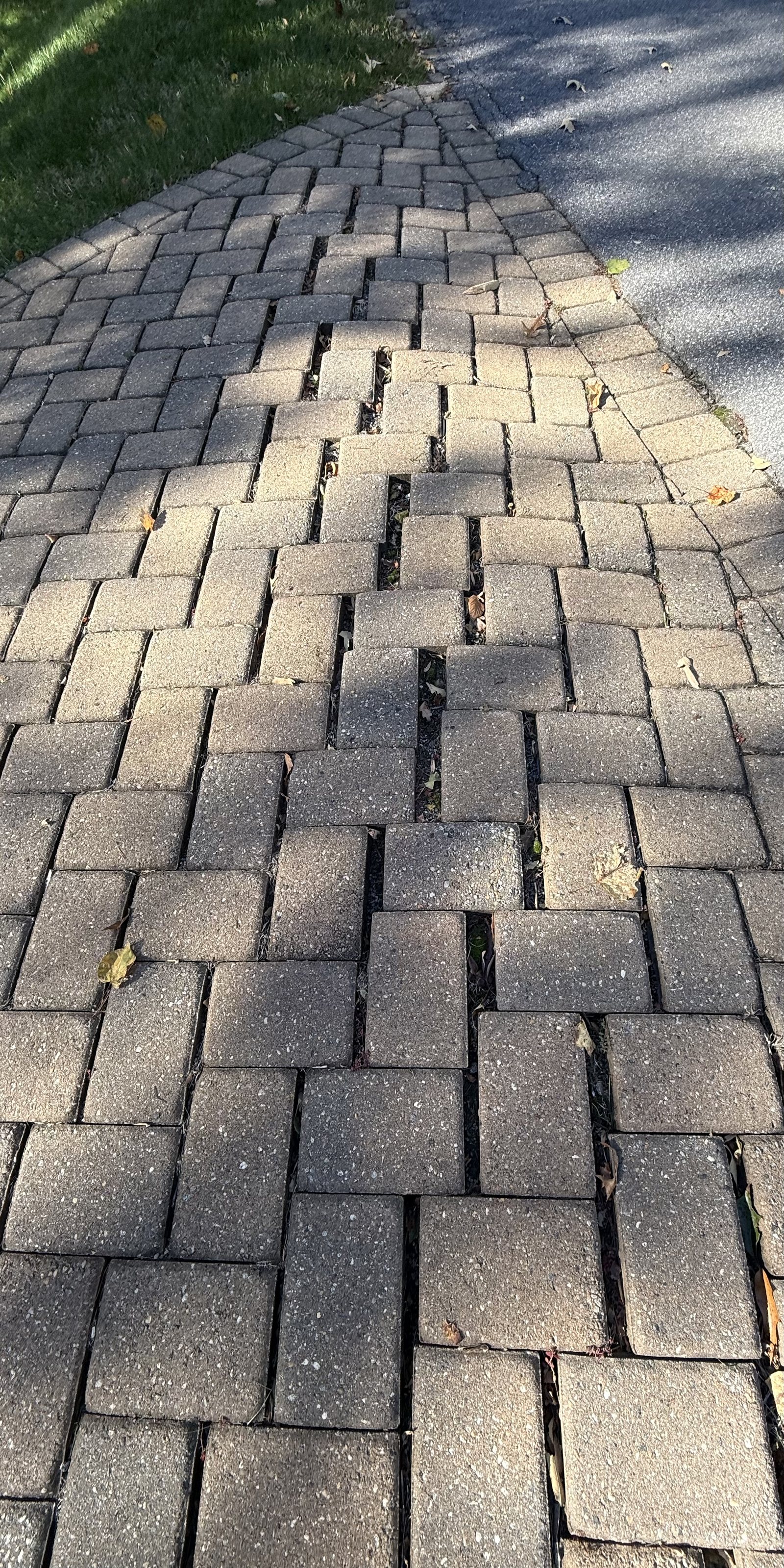
The sealer we use stabilizes the joint sand — it hardens it so it resists washing out. That matters for more than weeds and insects. Joint sand is what holds pavers in place. It does the job mortar does in a brick wall: every paver braces against its neighbors through the sand between them. Lose the sand and the pavers have nothing holding them, and traffic starts moving them around one at a time.
The film also carries an antifungal component that protects the coating itself from mold, moss and algae. On a shaded patio that is doing quiet work all year.
And a sealed surface is simply easier to keep clean. Stains sit on top rather than soaking in, which means a spill you get to reasonably soon comes off rather than becoming a permanent feature.
You Usually Do Not Have to Strip Anything
This is where the product choice matters, and it is the reason we use a two-part urethane rather than something cheaper.
It is breathable. Moisture and naturally occurring efflorescence can escape through the film rather than being trapped underneath it, which is the mechanism behind most of the clouding and whitening you see on badly sealed patios.
And because it is a film-forming sealer, once the existing coat has genuinely worn off you can generally apply the next one over the top. No stripping, no starting from bare paver. That is a straightforward reseal rather than a restoration.
The exception is a surface that still has plenty of sealer on it. Adding more product to a coating that has not worn down is how patios go cloudy in the first place — and this particular urethane is difficult to remove once it has cured, so that is a mistake worth not making. Which brings it back to the water test: it is not there to tell you the patio looks tired. It is there to tell you the old coat is actually gone.
What We Would Tell You at the Patio
If you call us out and the water still beads, we will tell you to wait. There is no version of this where sealing early does you any good, and several where it does harm.
If the joints have emptied out, that changes the job. Sand has to go back in and be properly installed before anything is sealed over it, and that is worth knowing before you budget for a simple reseal.
And if the patio has been sealed before with something we did not put down, we will want to know what it was, or test it, before adding anything on top. Products do not always play well together, and the cost of guessing is a patio that goes cloudy.
We are a Trident Master Certified Applicator, and we look at every job in person before quoting it. On resealing that is not a formality — whether you need us this year at all is genuinely something we can only tell by standing on the surface.
Common Questions
Can I just reseal every three years and not think about it?
You could, but you may end up applying product to a surface that did not need it, and over-application is the most common cause of clouding. The water test takes thirty seconds and tells you what a calendar cannot. If it still beads, wait a year and check again.
What happens if I leave it too long?
Nothing dramatic on day one. The color flattens off, the pavers start absorbing stains again, and the joint sand loses its stabilization and begins washing out in heavy rain. The last one is what turns a straightforward reseal into a bigger job, since the joints have to be refilled before anything can be sealed over them.
Do I need to reseal the whole patio if only the walking path has worn?
Generally yes. You can technically treat one area, but sheen and color differences between a fresh section and an older one are visible, and you would be back for the rest of it soon anyway. If one section is clearly ahead of the others, that is worth discussing on site.
Does regular cleaning make it wear out faster?
Gentle regular cleaning helps — rinsing dirt and organic growth off before it sets in protects the film. What shortens a coating's life is aggressive washing: high pressure, harsh chemistry, or a surface cleaner run hard over a sealed patio. There is a real difference between maintaining a sealed surface and scouring it.
More From Pro-Shine
 Written by Chuck Terry, owner of Pro-Shine Softwash in Moneta, VA. Pro-Shine has 10+ years of exterior cleaning experience serving Smith Mountain Lake and the surrounding communities across Bedford, Franklin and Roanoke counties. Chuck is a Trident Master Certified Applicator and visits every job in person before quoting it.
Not Sure If Yours Is Due?
Every estimate is free and done in person. Call or request a quote and we will come take a look.
Tell us about your project and we'll get back to you fast — usually within a few hours.
No obligation. No high-pressure sales — or high-pressure washing.