
Why Lake Homes at Smith Mountain Lake Go Green So Fast
Waterfront houses grow algae and mildew faster — and in different places — than homes a few miles from the water. The reason is the lake itself.
The Lake Puts Moisture in the Air Every Day
If you own a house on Smith Mountain Lake, you have probably noticed it goes green faster than a friend’s place in town. That is not your imagination, and it is not because your siding is worse. The biggest reason is the humidity coming off the water.
Algae and mildew need moisture to take hold and grow. A house in town dries out after a rain and stays dry until the next one. A house on the water sits in damp air most days, so its surfaces spend far more time wet, and the growth rarely gets a break.
In our experience working the lake, that humidity is the number one factor. Shade, trees and exposure all play a part, but the water is what sets lake homes apart.
On the Water, It’s Shade — Not North or South
Most advice about algae tells you to watch the north side of the house, because it gets the least sun. Away from the water, that holds up reasonably well.
On the lake it does not. With humidity always present, direction matters less than shade. Waterfront homes typically grow on whichever sides stay shaded — north or south — because the moisture is already there and shade is what keeps a wall from drying out. A south-facing wall under trees on the water can look worse than a north wall in full sun.
So if you are checking your own house, look at the shaded walls first rather than going by the compass.
It Shows Up All Over the House
On a house in town, growth tends to stay in a few predictable spots. Waterfront homes typically see more algae and mildew across the whole property — siding, trim, soffits, the roof, and hardscape like walkways and patios.
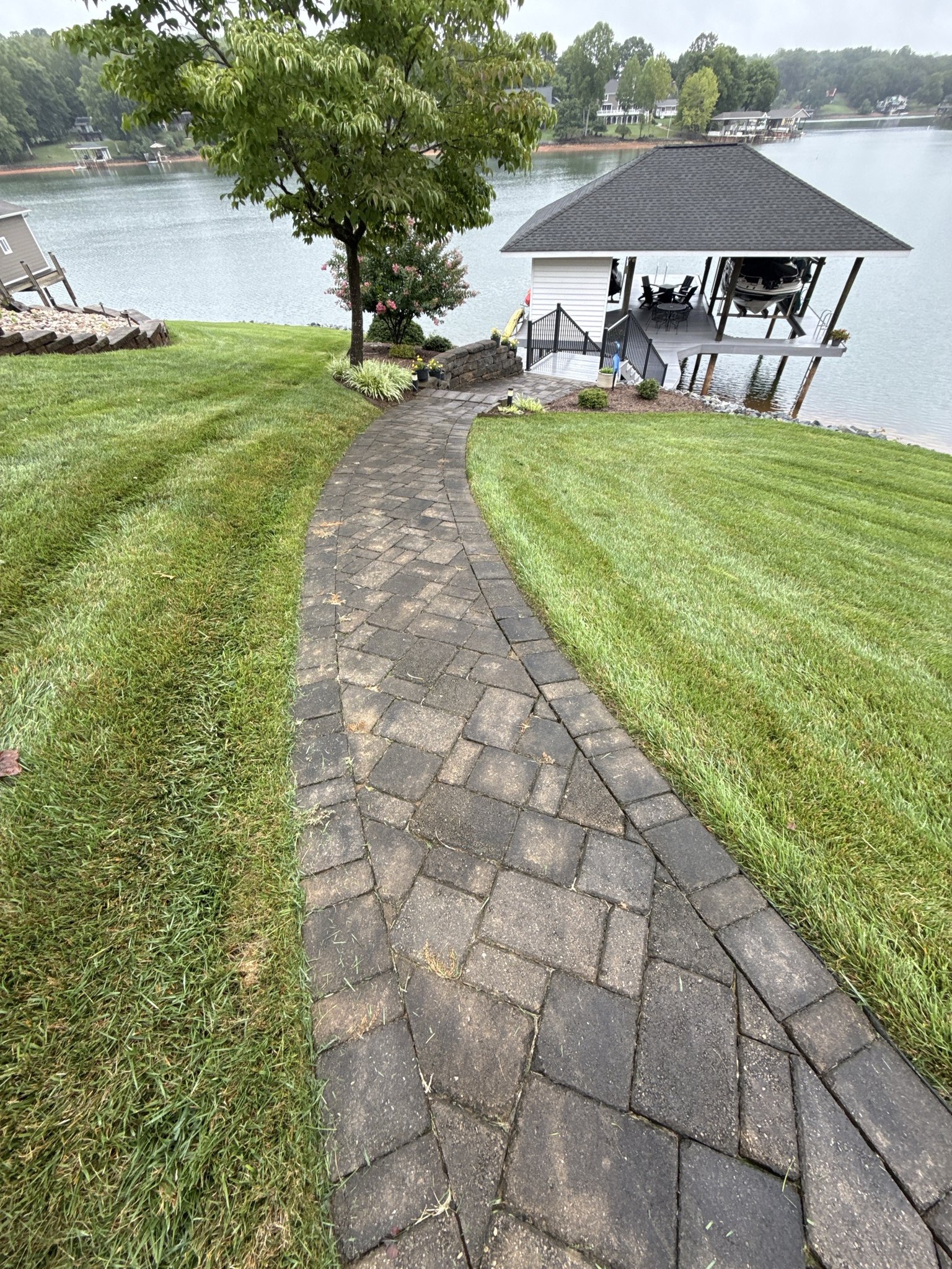
The walkway below ran from a Huddleston lake house down to the dock. Years of shade and lake humidity had darkened the pavers and filled the joints with moss. It is the same process that turns siding green, just on a different surface — you can see how it came back in the full walkway restoration.
How Often a Lake Home Needs Cleaning
No single schedule fits every house, but after years of working around the lake, this is what we typically recommend:
- Waterfront homes: about once a year. The humidity keeps growth coming back steadily, and a yearly wash keeps it from getting established.
- Homes in town: about every two years. Most go that long before growth is really noticeable — unless the house sits under heavy tree cover, which puts it closer to the lake schedule.
- Bugs, spider webs and other organic stains: about every six months. How often depends on how clean you like the house to look.
Those are starting points, not rules. Shade, trees and how the house sits on the lot all move the number, and the easiest way to judge your own is to look at the shaded walls.
Soft Washing Is How Lake Homes Should Be Cleaned
Siding and roofs on a lake home get soft washed, not pressure washed. Soft washing uses low pressure and a cleaning solution that kills algae and mildew rather than blasting the visible growth off the surface. Because the growth is killed instead of knocked loose, the house stays clean longer — which matters more on the water, where it comes back faster.
Landscaping is wet down before and rinsed after. The details are on our house washing page. Tree cover makes it worse on roofs too — here is a heavily shaded roof we cleaned in Eastlake, Moneta, covered in moss, lichen and algae before the owners listed the house.
Listing Photos Show Every Green Wall
If you are getting a lake house ready to sell, growth on the shaded walls shows up clearly in listing photos. For one lakefront property, the photos were already scheduled, so we cleaned the whole property before the listing went up — house, composite decks, the dock, walkways and concrete, on a deadline.
Common Questions
Why does my lake house get algae faster than houses in town?
Mostly humidity. The lake puts moisture into the air around a waterfront home every day, so its surfaces stay damp far longer than a house in town that dries out after each rain. Algae and mildew need moisture to grow, and on the water they rarely get a break.
Which side of a lake house gets algae first?
On the water it tends to be whichever sides stay shaded, north or south. Away from the lake the north side usually goes first because it gets the least sun, but with lake humidity always present, shade matters more than direction.
How often should a waterfront home be cleaned?
We typically recommend about once a year for waterfront homes. Houses in town can usually go around two years before growth is really noticeable, unless they sit under heavy tree cover. Bugs, spider webs and other organic stains are worth a touch-up about every six months, depending on how clean you like the house to look.
More From Pro-Shine
Written by Chuck Terry, owner of Pro-Shine Softwash in Moneta, VA. Pro-Shine has 10+ years of exterior cleaning experience serving Smith Mountain Lake and the surrounding communities across Bedford, Franklin and Roanoke counties. Chuck is a Trident Master Certified Applicator and visits every job in person before quoting it.
Is Your Lake House Going Green?
Every estimate is free and done in person. Call or request a quote and we will come take a look.
Tell us about your project and we'll get back to you fast — usually within a few hours.
No obligation. No high-pressure sales — or high-pressure washing.